

 This product has already been purchased.


Meals on Wheels Central Coast director Stewart Lemalu shares how the AICD’s Regional Not-for-Profit Scholarship and the Care Governance course helped him bridge commercial expertise with grassroots community impact.
Regional community organisations are the backbone of many parts of Australia, providing vital services and support where they are needed most. Behind that work are boards tasked with navigating rising demand, limited resources and growing regulatory expectations. Success depends on striking the right balance between strategic oversight and a genuine understanding of the people and communities they serve.
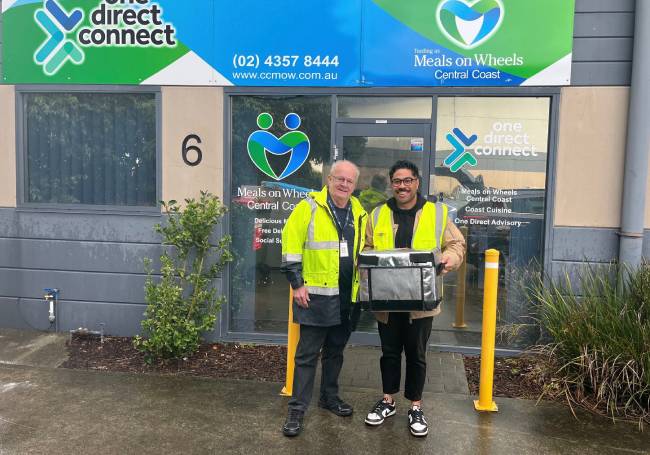
Stewart Lemalu, a non-executive director with Meals on Wheels Central Coast and a recent recipient of the AICD Regional Not-for-Profit (NFP) Scholarship, demonstrates how professional capability and lived experience can help shape effective governance.
Having completed the AICD Care Governance course in Newcastle, Lemalu reflects on the transition from operational execution to boardroom stewardship, the distinct challenges facing regional providers, and why diversity of background is a director's greatest asset.
Bridging commercial strategy and grassroots care
Lemalu’s path to board directorship developed from a decade-long career in technology and enterprise partnerships alongside a deep personal commitment to community service. Outside the boardroom, Lemalu has established a new advisory consultancy, Kinstone Co, founded on a clear purpose: "We exist to help organisations grow, adapt and compete in a world that's changing faster than they can".
His background also includes grassroots youth mentoring with the Police Citizens Youth Clubs (PCYC) and active church involvement. When he joined the nine-member board of Meals on Wheels Central Coast four years ago, the organisation's core mission resonated on a personal level. Having spent years assisting his aging grandmother with transport, meals, and daily routines, he saw firsthand how social isolation and loss of independence impact older Australians.
"The more that I understood Meals on Wheels, the more that I saw the meal was not only what the organisation provides, it is the connection, the dignity, the routine and the human interaction," Lemalu says. "Bringing a different perspective from my experience in technology, commercial leadership and operations while learning from an organisation deeply rooted in the community allowed me to deliver tangible impact and support our mission".
The high-stakes reality of regional boardrooms
Serving on a regional board carries distinct operational realities where decisions are felt immediately by the community. The proximity between high-level board decisions and frontline delivery demands a heightened awareness of human impact.
"One of the things that surprised me is how close governance can be to real people," Lemalu explains. "You can sit around a board table discussing strategy, risk and policy, but at a community organisation, you can really see the person or volunteer on the other side of that decision. That has made me much more conscious of the impact behind every decision."
Regional NFPs must frequently navigate complex operating environments without the resource buffers available to larger metropolitan entities.
"One of the biggest challenges is making good decisions when you don't have unlimited resources or perfect information," notes Lemalu. "There is often a tension between what the community wants and what the organisation can sustainably deliver. The board must connect financial sustainability, volunteers, technology and risk back to our core purpose, both for today and well into the future."
Care governance: From operational instinct to boardroom oversight
For directors entering the boardroom from commercial or executive backgrounds, resisting the urge to manage operational tasks can be difficult. Completing the AICD Care Governance course gave Lemalu the structured framework required to separate executive problem-solving from director-level stewardship, reinforcing why care governance must be central to board strategy.
"My natural instinct as an operator has always been to see a problem and get involved," he says. "The Care Governance course helped me understand where that instinct is useful as a director and where it is not. I became much clearer on the distinction between governance and management, the importance of risk, and the responsibility of the board to provide oversight without trying to run the organisation".
This governance education has transformed how Lemalu evaluates major proposals, ensuring technological and operational investments are assessed directly through the lens of client welfare and long-term viability.
"I am much more deliberate about looking at decisions in the round," Lemalu states. "If we are discussing a technology decision, I want to understand what it means for our people, the risks, the financial capability, and ultimately our ability to deliver on the mission. It is about asking whether we are solving an immediate issue or preparing the organisation for what is coming next."
Redefining the boardroom: Diversity as a governance asset
High-performing care boards require a combination of commercial acumen, structural compliance, and authentic care literacy to build stronger boards for safer care. Lemalu observes that aspiring directors from non-traditional backgrounds often grapple with imposter syndrome when contemplating board appointments.
"Early on, you wonder if you belong or what value you can bring," he reflects. "A vital takeaway from my governance training was that you have been appointed to serve both the organisation and the people who rely on it. You must do something purposeful or step aside for someone else. Good governance is ultimately about stewardship. You do not have to be the smartest person in the room; you just have to help the room make a better decision."
Lemalu strongly encourages community leaders and aspiring directors across regional Australia to undertake formal governance education and pursue board appointments.
"Don't assume that you need to look like a traditional director to belong in a boardroom," he concludes. "Good intentions aren't enough to sustain an organisation. Governance education gives people with deep community knowledge the practical tools to make their contribution effective. Sometimes the very thing you think makes you different is actually your greatest superpower at the board table."
Applications for the Regional Not-for-Profit Scholarship 2026/27 are now open. Find out more.
Latest news
Already a member?
Login to view this content