

 This product has already been purchased.


Overview
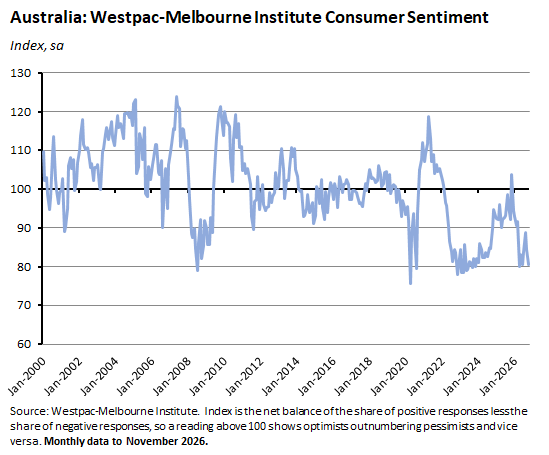
- Sentiment has soured again following last week’s RBA rate hike. The Westpac-Melbourne Institute Consumer Sentiment Index fell 2.7% to 78.2 in November, its lowest reading since late 2022. The weekly ANZ-Roy Morgan confidence measure dropped to a seven-month low. On the business side, the NAB survey showed confidence slipping to -15 index points in October, almost 20 points below its long-run average. Business conditions were down, too.
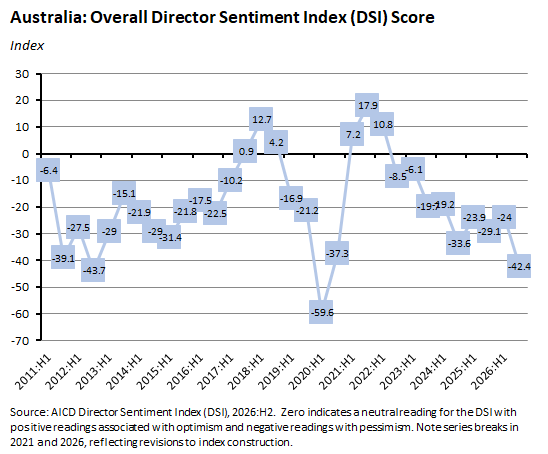
- Director sentiment has fallen to its lowest level since the pandemic. The AICD's latest Director Sentiment Index fell to -42.4 in the second half of this year, its weakest reading since 2020. Nearly two-thirds of directors (64%) expect the economy to be weak over the coming year, and 60% anticipate weak business conditions. Global economic uncertainty is ranked as the top economic challenge (40%), but productivity growth is close behind (39%). Domestic economic conditions are now the leading issue keeping directors awake at night.
- Productivity remains directors' top policy priority. Productivity growth is ranked as the most pressing issue for the federal government to address, both in the short term and over the next 10–20 years.
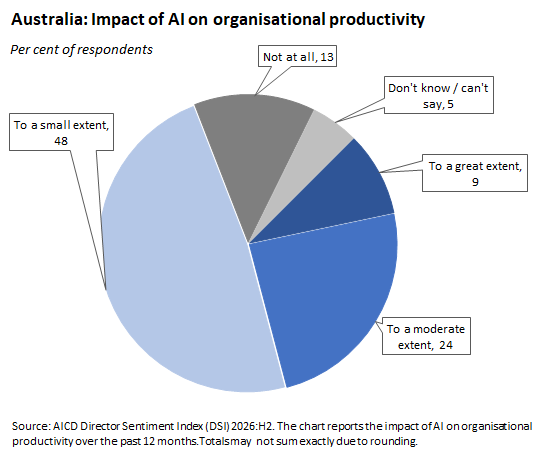
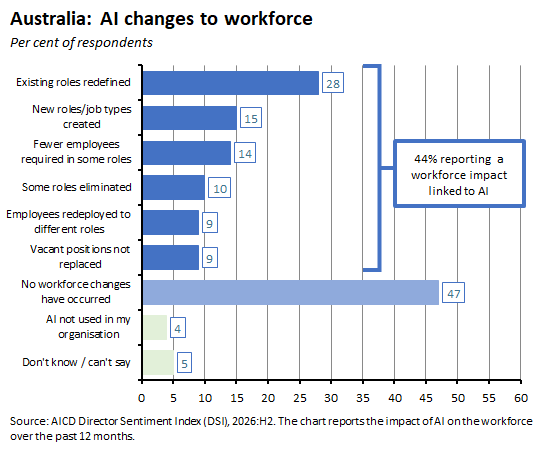
- According to directors, AI's productivity payoff is still at an early stage. Only 9% of directors said AI had lifted their organisation's productivity ‘to a great extent’ over the past year, fewer than the 13% who reported no impact at all. Almost half (48%) said AI had contributed ‘to a small extent.’ Meanwhile, the workforce implications are starting to unfold, with 44% of directors reporting at least some AI-related workforce impact over the past 12 months vs 47% reporting no AI-related changes.
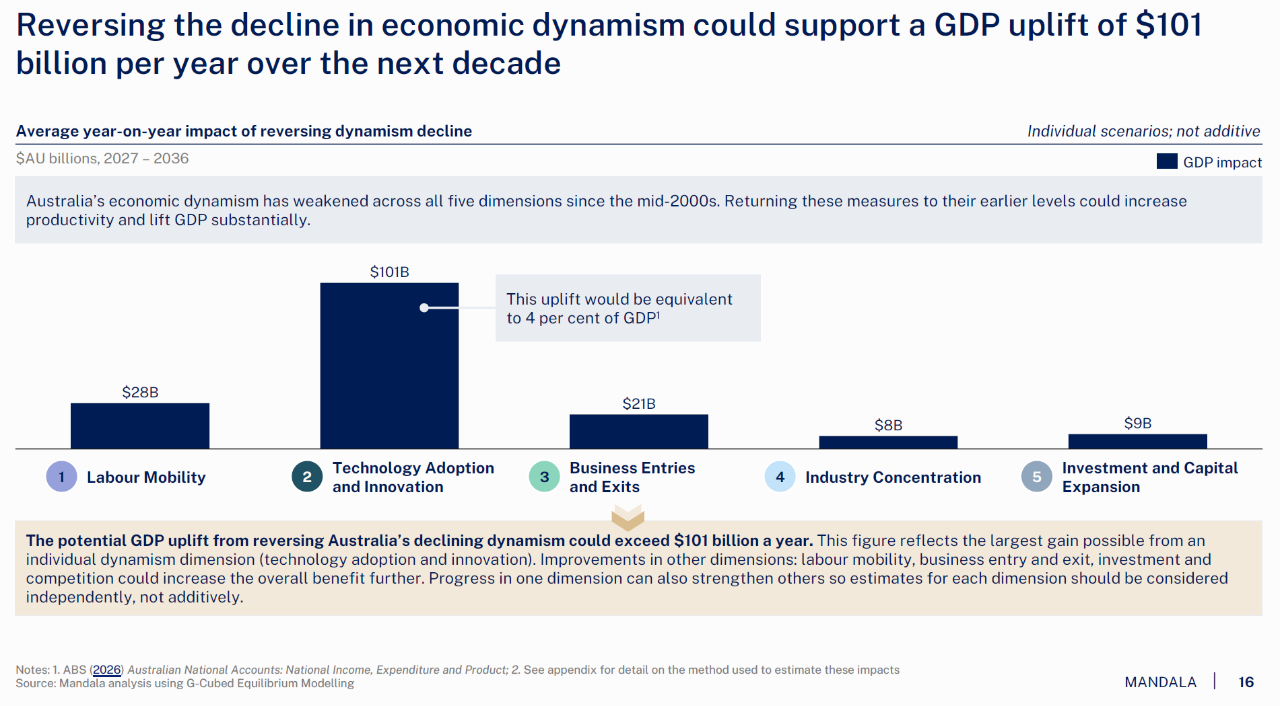
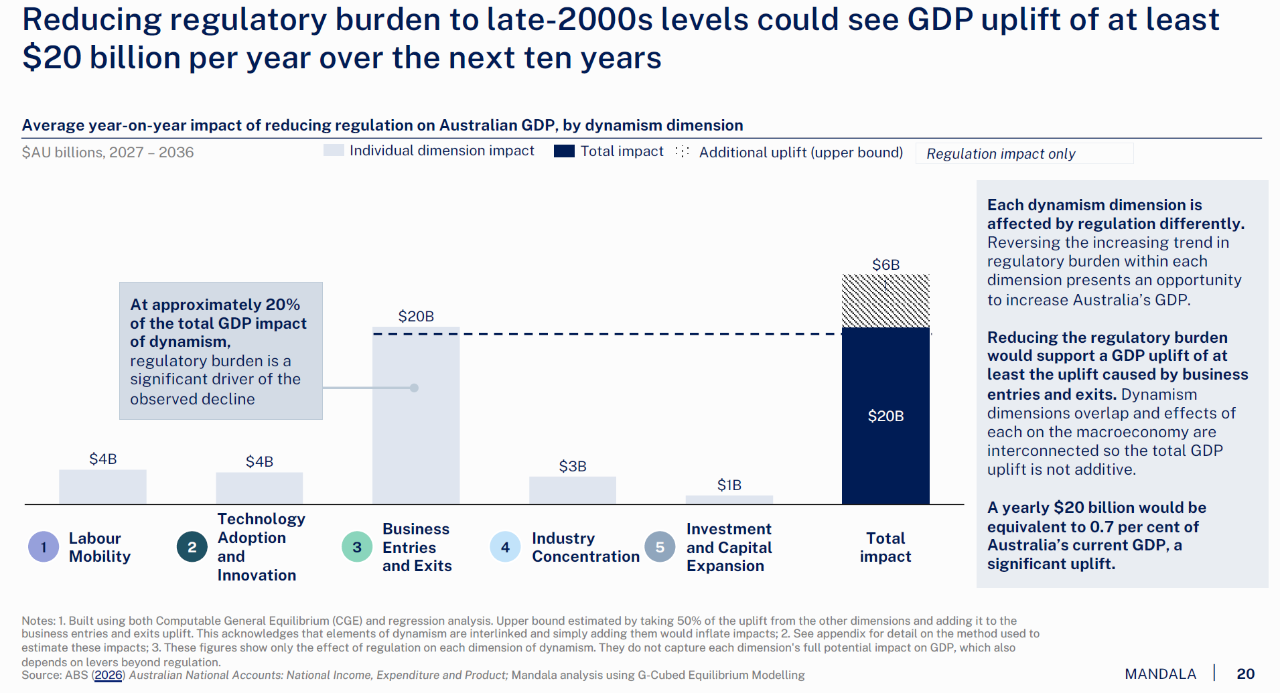
- Boosting productivity will likely require lifting business dynamism. The Productivity Commission's interim report says ‘no single reform’ will restore dynamism but sketches out a range of options. A recent AICD-commissioned report from Mandala Partners reckons that reversing the previous decline could lift GDP by at least $101 billion (about 4% of GDP) a year over the next decade, Regulatory reform alone could contribute at least $20 billion (about 0.7% of GDP) a year, with the biggest gains coming from better rules on business entry and exit.
Another month, another round of negative sentiment readings. After a fifth RBA rate rise last week, households are deeply unhappy. The monthly Westpac-Melbourne Institute Consumer Sentiment Index for November tumbled to its lowest reading since late 2022 while the weekly ANZ-Roy Morgan Consumer Confidence Index dropped to a seven-month low following the Monetary Policy Board’s 6-3 vote to tighten monetary policy. Meanwhile, the NAB Monthly Business Survey for October reported declines in business confidence and business conditions, with the confidence index now deep in negative territory and almost 20 points below its long-run average.
That pessimistic take on current conditions is shared by many directors. This week also saw the release of the AICD’s latest Director Sentiment Index (DSI), with our 2026:H2 survey reporting a marked decline in director sentiment. The headline index has slumped to its lowest level since 2020, when the COVID-19 pandemic was unfolding. Nearly two-thirds of directors (64%) expect the Australian economy to be weak over the coming year while 60% anticipate weak business conditions.
Granted, a big part of the story here is the international environment. And consistent with that, the DSI reports that directors view global economic uncertainty as the top economic challenge facing Australian businesses. But another important part of the story is the domestic economy. Domestic economic conditions are now the leading issue keeping directors awake at night, while productivity is ranked as the second most important economic challenge as well as the top policy priority for government in both the short term and the long run.
A look back over our DSI results shows that productivity growth has become an increasing focus for directors in recent years. Our current inflation problems and their interaction with a capacity-constrained supply-side economy and a lower national economic speed limit are making the issue even more salient. Last week, the Productivity Commission released its interim report on Unlocking business dynamism: removing barriers to entry, growth and exit, with the Commission noting the important contribution dynamism makes to productivity growth. Productivity is also a focus for the AICD. We recently launched a new report commissioned from Mandala Partners, The Stagnant Nation: Lifting Australia’s Dynamism, that looks at the role played by the weight and complexity of regulation in explaining a deterioration in several key measures of economic dynamism. And this week I moderated a distinguished AICD panel discussion on the same topic – you should be able to access the recording here.
Below we discuss the latest confidence readings, dig deeper into the new DSI (with lots of charts – available in the chart version of the Weekly update), look at the Productivity Commission’s interim findings, review the key messages from the Mandala report, and round up other recent Australian data.
Business confidence fell again in October
The latest NAB Monthly Business Survey reported declines in both business confidence and conditions last month. Business confidence fell one point to -15 index points, moving further below the series long-run average of +4 index points.
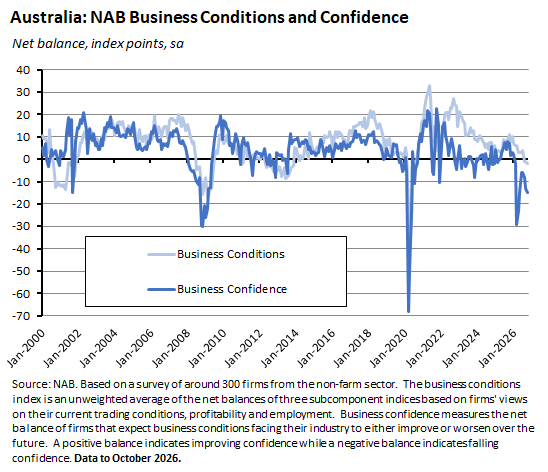
Business conditions also slipped one point in October, dropping to -2 index points and falling to eight points below the series long-run average. By subcomponent, trading conditions fell four points and profitability dropped by two points, although employment rose by five points. Forward orders slumped by 11 points to -12 points last month, suggesting further weakness could lie ahead.
Capacity utilisation also eased for a third consecutive month, falling by 0.1ppt to 82.1%. Even so, that rate is still above the series long-run average, consistent with the argument that the Australian economy remains constrained on the supply side.
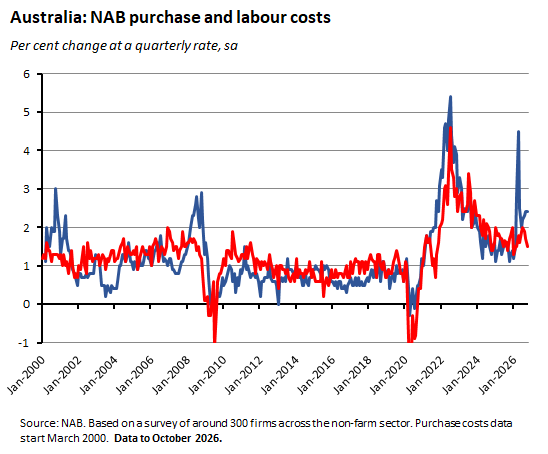
Likewise, the NAB survey reported some evidence of ongoing cost pressures, as growth in purchase costs rose 0.1ppt to 2.4% (quarterly rate). In contrast, growth in labour costs softened by 0.3ppt to 1.5%. Product prices, meanwhile, rose 0.6%, roughly in line with the long-run average.
The AICD’s 2026:H2 DSI fell to its lowest level since the pandemic
Consistent with the low level of business confidence reported above, the AICD’s 2026:H2 Director Sentiment Index (DSI) fell to its lowest level (-42.4) since 2020 and the COVID-19 pandemic.
The survey underpinning the latest DSI was conducted online between 22 and 29 September this year, closing on the same day that the Monetary Policy Board voted to take the RBA’s cash rate target up to 4.6%. The survey sample comprised 1,373 AICD members with current directorships across Australia.
According to respondents, global economic uncertainty is currently the top economic challenge facing Australian businesses (40%), followed closely by productivity growth (39%) and then inflation and high interest rates (33%).
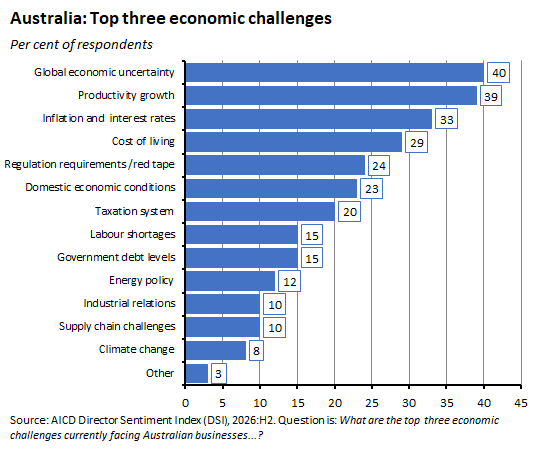
Given the war in the Persian Gulf and its impact on global energy prices, plus the macro uncertainties associated with the AI boom, a high ranking for global economic uncertainty was expected. That said, while the share of directors nominating uncertainty is the highest it has reached in several years, it remains below the peaks associated with the onset of the COVID-19 pandemic and the post-pandemic inflationary surge associated with the Russian invasion of Ukraine.
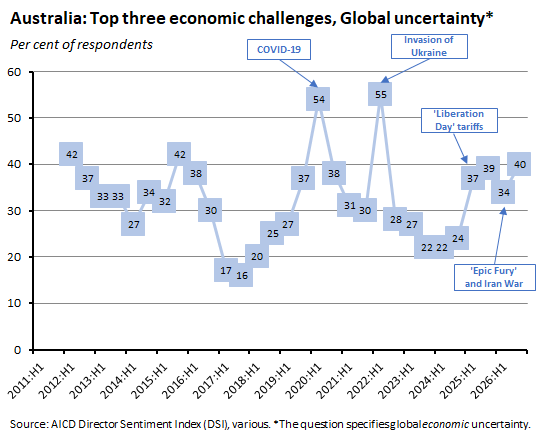
Directors are not just worried about global conditions. The nexus between Australia’s supply-constrained economy, high domestic inflation, and the RBA’s push to tighten monetary policy is also prominent in their list of economic concerns, with productivity growth ranked the highest of these national issues.
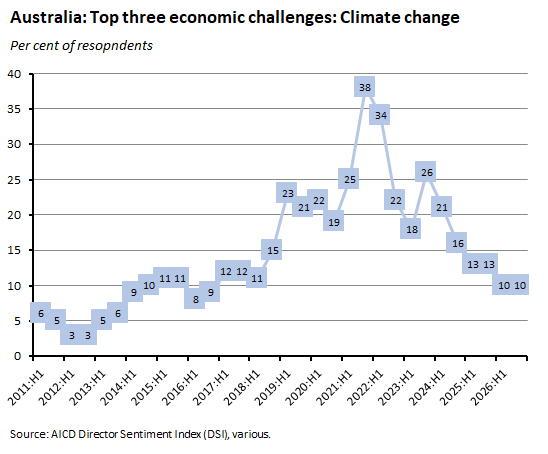
At the same time, and with these issues top of mind, others – including climate change – have receded in relative importance.
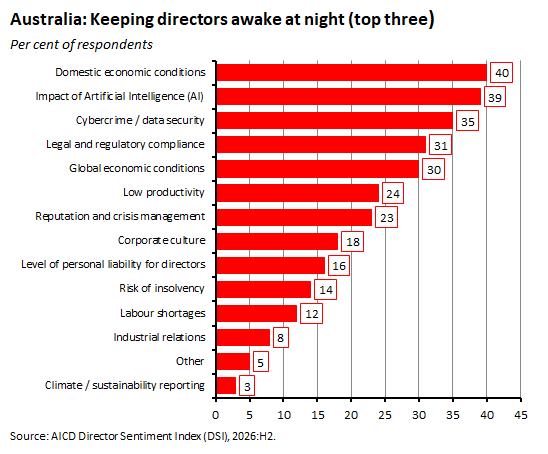
Turning from specifically economic concerns to the more general issues that are ‘keeping directors awake at night,’ domestic economic conditions (40%) top the list, followed by the impact of AI (39%), cybercrime/data security (35%), legal and regulatory compliance (31%) and global economic conditions (30%).
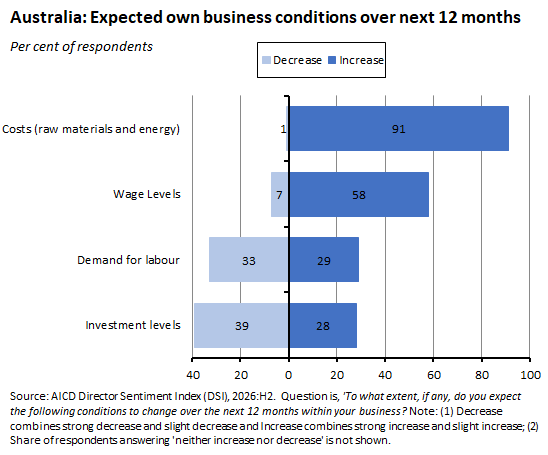
The combination of a tough global environment and a challenging domestic one is reflected at the level of individual businesses, where the net balance of respondents expecting a rise in costs over the next 12 months has now nudged to just above the elevated levels it reached during the post-pandemic/Ukraine invasion inflation surge at the start of the current decade.
Given that backdrop, it is again no surprise that directors expect subdued conditions in their own businesses across the year ahead. For example, more directors now expect to see falls in investment and labour demand over the next 12 months than increases. Likewise, the share of directors now anticipating an increase in wage levels has fallen to a post-pandemic low.
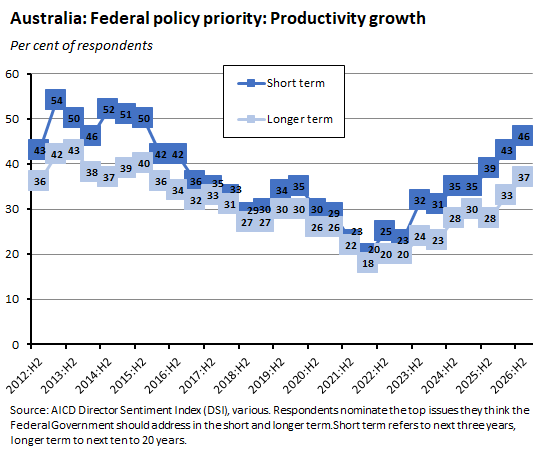
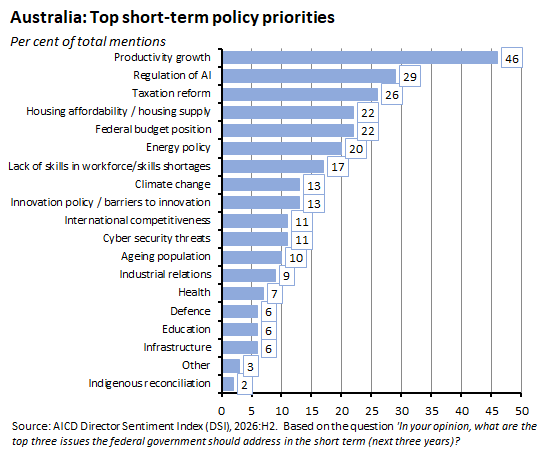
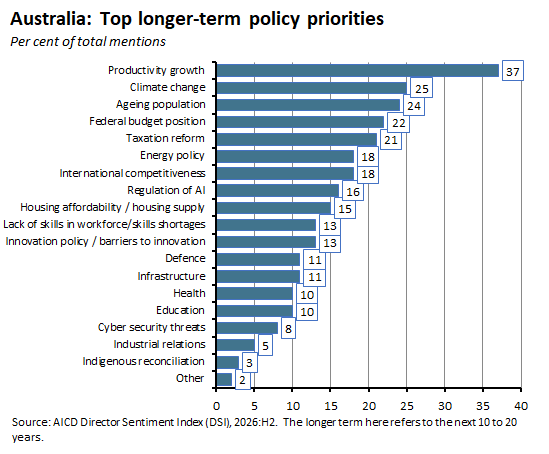
Directors’ increased focus on productivity growth is also reflected in their views on government policy priorities, where productivity growth is ranked as the top issue that the federal government should address in both the short term (46% of respondents) and over the next 10-20 years (37%).
It is notable that, after falling to a low during the pandemic period, the focus on productivity has trended sharply upwards over recent years. That said, we are not quite back at the levels that marked the early part of the pre-pandemic decade.
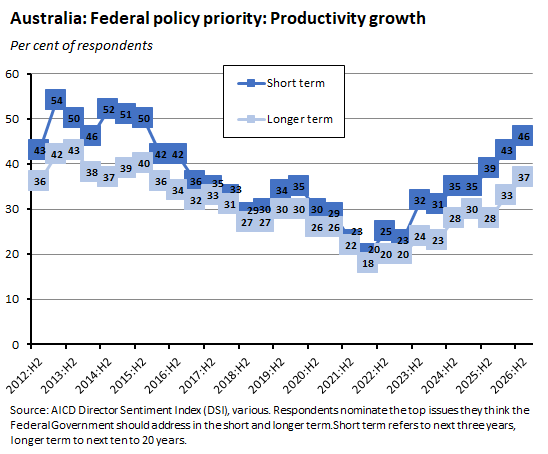
That trajectory makes for an interesting contrast with housing affordability/housing supply as a short-term policy priority. After running above 30% in most recent surveys (including 33% in the survey conducted in the first half of this year), the share of respondents choosing this option has slipped to 22%, the ongoing housing market correction likely having an impact here.
In terms of potential policies to boost Australia’s productivity performance, the DSI reports on directors’ views across several dimensions:
- On tax, in terms of relative importance, respondents favoured reforms to personal income tax (nominated by 47% of respondents) followed by reforms to capital gains tax, company tax, and state-based taxes (all three options nominated by 43% of respondents).
- On migration, 54% of directors thought that – if viewed from a productivity perspective – current levels of skilled migration should be higher vs the 18% who thought skilled migration should be lower.
- And on barriers to business investment, more than half of respondents felt that regulatory complexity and/or uncertainty (52%) and high taxation or unfavourable tax policies (51%) were important constraints, while almost half (48%) identified policy or economic uncertainty as a headwind for capex.
Finally, this latest edition of the DSI provided a useful update on the unfolding impact of AI. Along with high second-place rankings in the lists of issues causing directors to lose sleep and issues that government policy should address in the next three years, the survey also reported directors’ assessment of the impact of AI on organisational productivity and the workforce (see also this week’s further reading roundup for links to related RBA work on these issues).
In the case of productivity, and consistent with findings elsewhere, our survey suggests we are still at a relatively early stage in terms of the impact. For example, only 9% of directors reported that AI had contributed to their organisation’s productivity ‘to a great extent’ over the past 12 months, which is a smaller share than the 13% who reported no impact at all over the same period. Most outcomes were found somewhere between these two extremes, with 24% of respondents citing a moderate impact while the most common view, shared by almost half of directors (48%), was that AI has only influenced organisational productivity to a small extent
Turning to AI’s impact on the workforce, some 44% of directors reported that there has been at least some impact linked to AI over the past 12 months. That compares to the 47% who said that no AI-related workforce changes had occurred over that period.
Within the group of directors reporting AI-related effects, the most common were the redesign of existing roles (28% of all respondents), the creation of new roles or job types (15%) and the need for fewer employees in some roles (14%). Smaller shares of directors reported that AI has led to the elimination of some roles (10%), redeployment (9%), or the decision not to replace vacant roles (also 9%).
Addressing Australia’s dynamism problem
Last week, the Productivity Commission (PC) issued its interim report on reducing barriers to business dynamism. With productivity front of mind not just for directors but also for government, Canberra had tasked the Commission with investigating barriers to business dynamism, including regulatory and administrative burdens, access to capital markets, business registration and industry-specific licensing, and the design, operation and integrity of corporate and personal insolvency frameworks. The PC defines dynamism as the economy’s capacity to renew itself through the entry, growth, restructuring, and exit of businesses – all processes which help allocate resources to their most productive use. Sadly, a range of indicators suggest that dynamism has weakened over recent years.
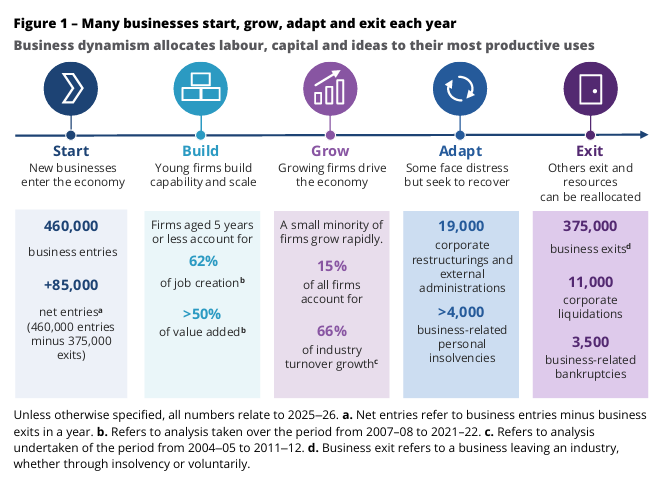
The PC reckons that ‘no single reform will restore business dynamism’ but instead proposes policy action across regulatory burdens, access to finance, management capacity, business transitions, and insolvency. For example, it argues that better information channels would help businesses make decisions and meet obligations, better targeted interventions would improve the effectiveness of government support, and better insolvency settings would preserve more economic value.
Regarding the first item on the PC’s list – the regulatory burden – the Commission notes that:
‘…the scale, complexity, and cost of regulation in Australia can make it harder than it needs to be for businesses to thrive. The burden does not necessarily stem from individual regulations. In some industries, the cumulative burden of requirements can create regulatory thickets that are particularly difficult for businesses to navigate.’
The AICD has been making the case for a better regulatory environment for some time. Last year, for example, the AICD commissioned Mandala Partners to attempt to quantify the burden of regulation and its change over time. The results of that work were presented in the 2025 report, $160 billion and counting: The cost of Commonwealth regulatory complexity, in which Mandala estimated that the total cost of meeting Commonwealth regulation had grown from around $65 billion (or 4.2% of GDP) in 2013 to almost $160 billion (about 5.8% of GDP) by 2024.
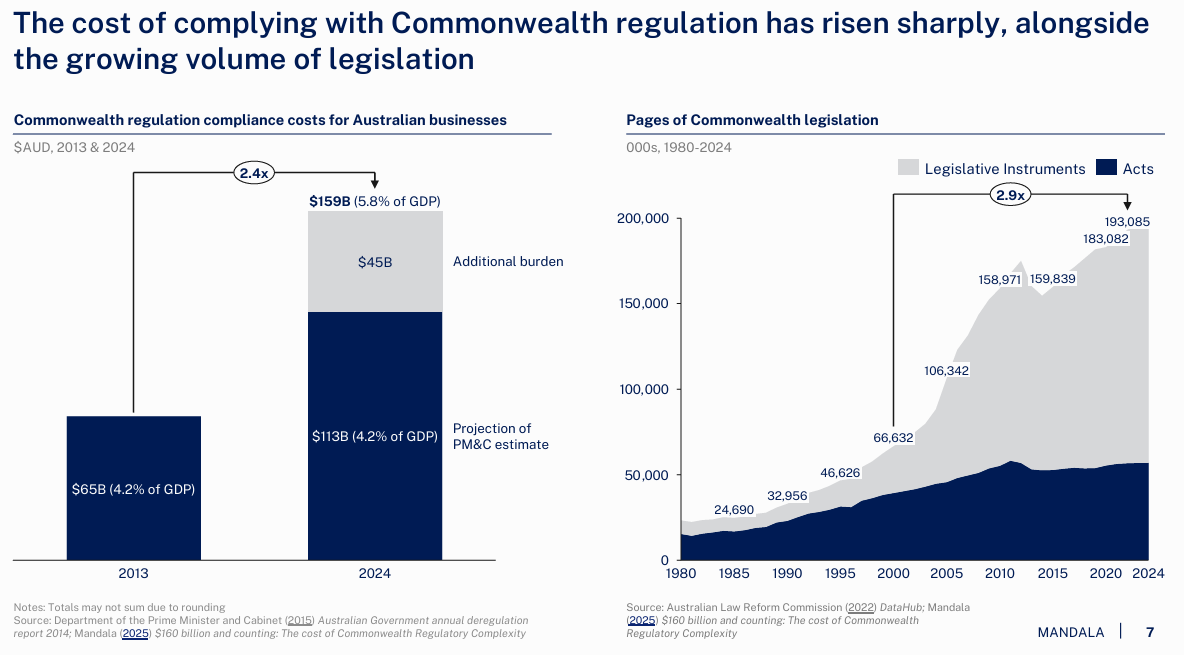
Sitting behind that increase in compliance costs are increases in the volume and number of pages of legislation alongside a parallel rise in legislative complexity. One consequence of this growing burden is that the estimated share of board time spent on compliance more than doubled between 2015 and 2025, rising from 24% to 55% over the space of a decade. Mandala also notes that this expansion of regulation is correlated with a decline in Australia’s economic performance: while the amount of Commonwealth legislation has tripled over the past three decades, productivity growth has declined over the same period, falling to its lowest rate in more than 60 years.
Building on this argument, last month we noted the launch of a new AICD-commissioned report from Mandala. In work that is relevant to the PC’s inquiry, The Stagnant Nation: Lifting Australia’s Dynamism focuses on the implications of the decline in Australia’s economic dynamism across five key dimensions since the mid-2000s: labour mobility, technology adoption and innovation, business entries and exits, industry concentration, and investment and capital expansion.
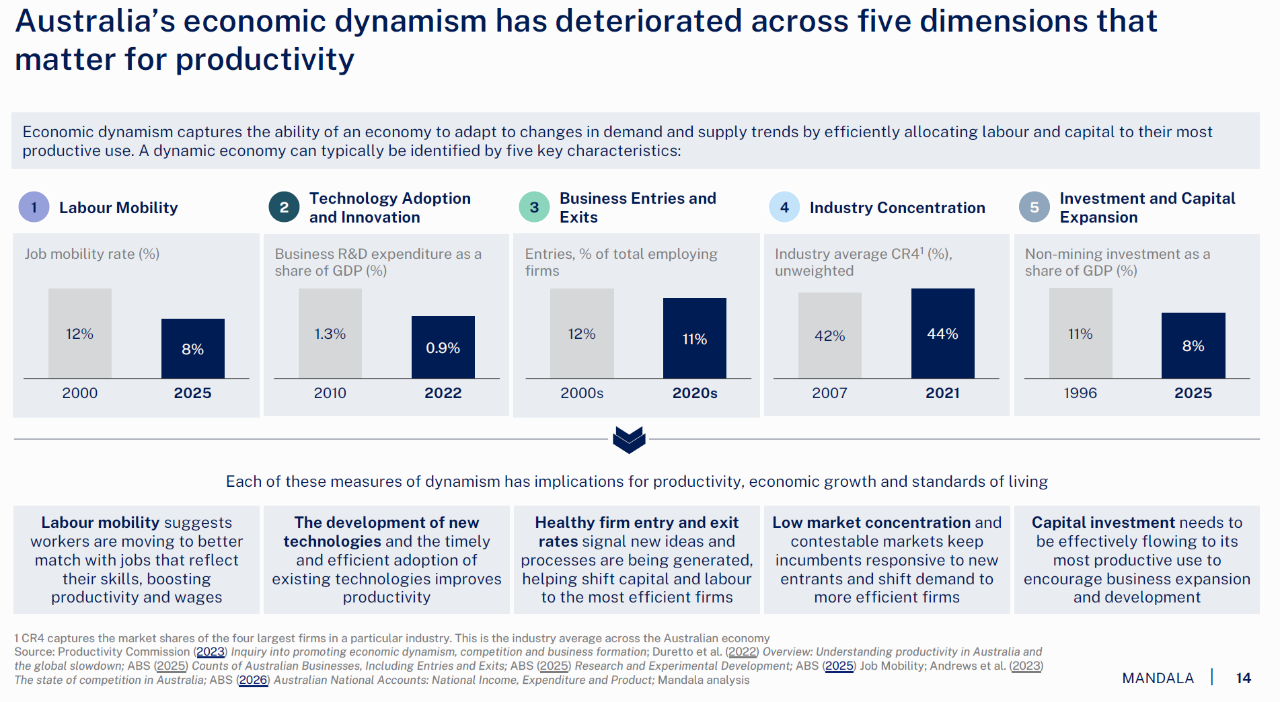
The report estimates that reversing this decline in dynamism could boost Australia’s productivity growth and lift GDP by at least $101 billion (about 4% of GDP) a year over the next decade.
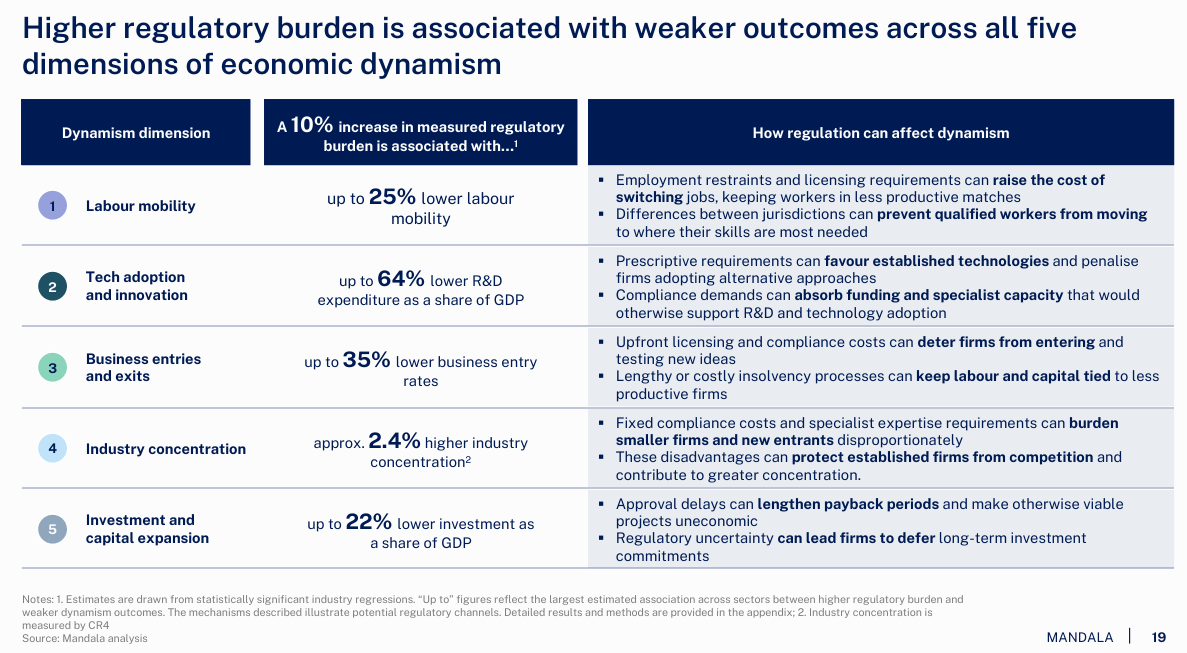
Some of this decline in dynamism is the product of macroeconomic developments such as weak demand, higher borrowing costs, and elevated geopolitical and economic uncertainty. And some of it reflects structural changes, including sectoral shifts in the economy and an ageing population. But the report also finds that a higher regulatory burden is associated with weaker outcomes across all five of these dimensions of economic dynamism.
In this context, Mandala estimates that regulatory reform, by contributing to a reversal in the decline in dynamism, could add at least $20 billion (about 0.7% of current GDP) a year to GDP over the next ten years. The largest estimated gain would come through improving regulation surrounding business entry and exit.
Other Australian data points to note
The Westpac-Melbourne Institute Consumer Sentiment Index fell 2.7% to a reading of 78.2 this month, a four-year low. According to Westpac, reported sentiment was last this low in late 2022, when the annual rate of inflation was close to 8% and the RBA was rapidly tightening monetary policy, and before that during the onset of the COVID-19 pandemic. Four out of the five subindices fell over the month. The largest decline was a 10.2% drop for ‘economic conditions next 12 months’ which fell to 70.3, its lowest level since August 2020 during the preliminary stages of the pandemic. There were more modest falls for ‘economic conditions next 5 years’ and ‘family finances next 12 months’ (both down 1%), with the former falling from what was already its lowest reading since August 2020. ‘Time to buy a major household item’ was down 3.7%. Only ‘family finances vs a year ago’ was up from October’s reading, rising 3%. According to the survey data, consumers expect further mortgage interest rate rises over the coming year, anticipate a further rise in unemployment, and are more bearish on house prices.
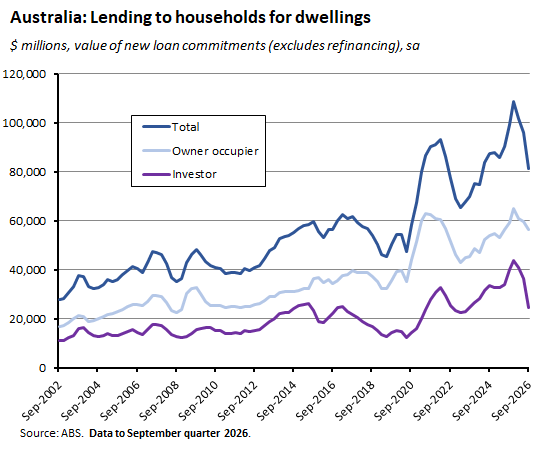
The ABS said that the total number of new loan commitments for dwellings slumped 15% over the September quarter 2026 (seasonally adjusted) to be down 21.4% over the year. Loans for owner occupiers were down 5.3% quarter-on-quarter and 9.8% year-on-year, pulled down by 8.6% quarterly and 12.3% annual declines in loans for first home buyers. Investor loans dropped 30.6% over the quarter and fell 38.5% over the year. The value of new home loans also fell, dropping 15.5% over the quarter and declining by 18.1% over the year. Again, the quarterly fall in the value of investor loans (32.3%) outpaced the decline in the value of loans to owner occupiers (5.3%). According to the Bureau, that 15.5% quarterly decline in the value of new home loans is the largest in the history of the series (since the September quarter 2002). In addition, the quarterly declines in the number and value of investor loans are both the largest quarterly falls on record.
Further reading and listening
- Treasury Secretary Jenny Wilkinson’s speech to the US Studies Centre on Australia’s economic security in an imbalanced world argues that while ‘the best defence against shocks is a flexible economy and a government with the fiscal space to respond,’ today ‘these defences are no longer enough. Economic security risks are rising owing to escalating geostrategic competition, rapid technological change, and the growing weaponisation of economic dependencies for strategic ends.’
- RBA Assistant Governor (Economic) Sarah Hunter’s speech on what happens to the economy as ‘intelligence gets cheaper.’ According to Hunter, so far, the AI story is mostly one of rapid diffusion, limited evidence of any material lift to aggregate productivity, but a significant impact on current demand through the rapid buildout of AI-related investment and associated spillovers. In the case of Australia, for example, the RBA’s estimates for realised data centre investment have increased ten-fold (albeit from an extremely low base) over the past three years. While much of the direct spending has been on imported machinery and equipment, there have also been modest indirect spillovers to supporting industries including construction and engineering services and infrastructure, particularly energy generation and transmission. RBA staff also estimate that around 5% of Australian households’ financial wealth is invested in the equity of AI-related companies, both directly and through superannuation. Contacts in the RBA’s liaison program have told the central bank that AI has not yet impacted most firms’ headcount and is not expected to over the next year, consistent with occupation-level analysis showing little sign so far of AI materially disrupting the labour market, and with our own DSI results. That said, there is some modest evidence of an AI-related impact taking the form of weaker job ad postings and employment outcomes in more AI-exposed occupations.
- Hunter’s speech cites a range of recent publications by RBA staff on the impact of AI on the Australian economy including pieces on household wealth exposure, data centre investment, early labour market effects, and pass-through from high export prices of AI-enabling goods.
- Leader of the Opposition Angus Taylor warns that Australian enterprise ‘is being crushed under the weight of expanding government, stifling regulation, and rising taxes.’ Taylor has promised that in power, his government would be ‘cutting red and green tape like never before,’ would ‘rewrite the Statements of Expectations for all the major regulators requiring growth in living standards to be prioritised in all of their regulatory activities’ and would ‘aim to reduce the federal regulatory burden by 25 per cent over our first term of government.’
- From Jobs and Skills Australia, the second edition of the Jobs and skills roadmap for regional Australia.
- In last Friday’s AFR, John Kehoe writes that Australia faces a recession-like squeeze.
- The e61 Institute investigates the distributional implications of bracket creep, finding that the consequent lift in tax rates is much larger for workers near the full-time minimum wage and near the top tax bracket. Assuming no offsetting changes in tax policy (in practice, an unrealistic assumption), a worker currently earning $45,000/year could lose 56% of any real income gain due to bracket creep, while those near the top tax threshold could see a clawback rate of around 65%.
- From the ABS, five insights from Australia’s changing water supply.
- According to the OECD’s Digital Economy and Society Outlook 2026, last year AI was used by 20% of enterprises with 10 or more employees across the OECD and by 52% of enterprises with 250 or more employees. Among individuals, generative AI use reached 37% in 2025.
- The OECD’s Climate Action Monitor 2026 warns that extreme heat is becoming a defining climate risk, as the world experiences more frequent and intense heatwaves. For example, there were 126% more days with above-average temperatures recorded per year in 2021-25 than over 1981-2010. Drought risk is also expanding, spreading to regions not historically associated with chronic water scarcity. And drought and extreme heat together increase wildfire risk.
- The McKinsey Global Institute’s new report on the ‘trillion-dollar opportunity’ offered by climate adaptation.
- The IEA’s Renewables 2026 report projects an increase in global renewable capacity of almost 4,800 GW over the 2026-31 period, up 60% over the previous period, with solar PV set to account for more than 75% of that growth. Renewables are also forecast to generate almost 45% of global electricity by 2031, up from 33% in 2025. But that rise will also increase system integration challenges: technical curtailment of wind and solar PV output in key markets almost doubled in both 2024 and 2025 while the number of hours of negative electricity prices continues to rise across Europe. By country, China will remain the largest driver of global increases in renewable energy, although domestic policy changes mean its share is projected to fall from more than 60% in 2025 to an average of 53% over the forecast period. India is predicted to emerge as the world’s second-largest growth market, with renewable capacity projected to more than double by 2031.
- Brad Setser on Europe’s deal limiting Chinese car imports.
- Related, the changing global car industry: the world’s biggest carmakers in 2015 vs 2025.
- The US Fed thinks there has been an increase in the pass-through from oil prices to core inflation in advanced economies.
- A new BIS database on global currencies between 1850 and 2026 finds that the number of currencies in circulation rose from about 67 in 1850 to a peak of 192 in 1994, after the breakup of the Soviet Union. It has since fallen to 163, mainly because of the arrival of the euro. Turnover has been high: around 70% of all currencies in the database have been discontinued, with the median currency lasting only 33 years and nearly a quarter lasting less than a decade.
- Language as an attack surface in the AI era.
- US oil imports from Venezuela have surged.
- On populism and zero-sum thinking.
- An (even more) pessimistic take on the Peter Principle.
- The Odd Lots podcast offered an early take on the macro implications of last week’s Blue Tsunami.
- After a long hiatus, the Hexapodia podcast has returned with a discussion of the Anthropic IPO and the near-term future of AI which takes an interesting detour via the Bronze and Iron Ages.
- The FT economics show talks to Isabella Weber and asks, Can economics fight fascism?
Latest news
Already a member?
Login to view this content