

 This product has already been purchased.

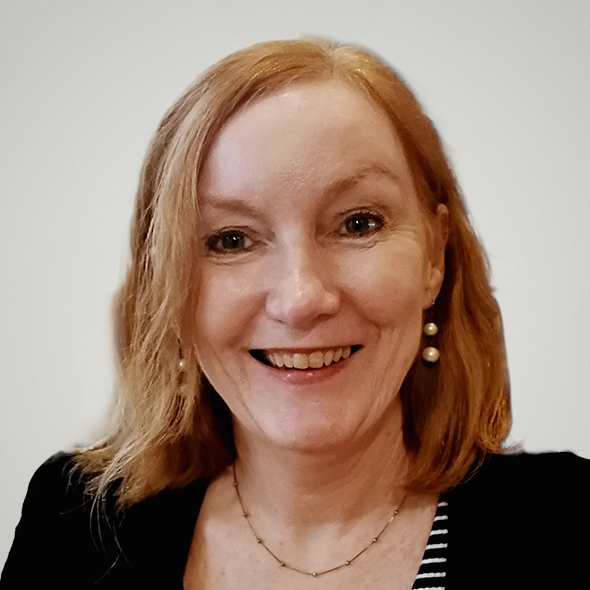
Geopolitics now reaches inside every boardroom, not just those of multinationals and exporters. Dr Merriden Varrall, special adviser in geopolitics at KPMG, outlined recently why directors should stop chasing daily news and instead focus on three underlying risk stories reshaping strategy, trust and supply chains. Listen to the whole interview on the Boardroom Confidential podcast on the AICD website, or your favourite podcast app.
International relations has now become front-page content “pretty much every day”. But Merriden Varrall’s message is that boards can’t afford to just react to the latest daily headlines. By tomorrow, today’s story may be irrelevant — yet the forces behind it will still be shaping markets,regulation, supply chains, talent and reputation.
Varrall, special adviser in geopolitics at KPMG, encourages boards to think in terms of themes and scenarios, rather than events. It’s an approach designed to support strategic planning, continuity and sustainability — the core remit of governance — even when the world feels volatile.
Welcome to the polycrisis
Varrall argues that the last decade has tipped the world into a new operating mode — one where risks are more frequent, more intense and more interconnected.
“Over the last 10 years, things have really shifted, driven by multiple factors: the Global Financial Crisis, Covid, and broader challenges to the legitimacy of the Western-led global order,” she told Boardroom Confidential.
The World Economic Forum’s term “polycrisis” is useful shorthand: the combined impact of risks is greater than the sum of the parts. Conflict and territorial disputes aren’t new, but the current environment is different because multiple stressors interact — great-power competition, climate impacts, populism and technology rivalry, all intensifying. The message? Boards can’t treat geopolitics as an occasional externality anymore.
What directors should do differently
The first board question is deceptively simple: Are we thinking about this? Is geopolitical risk genuinely on the organisation’s radar — and is the response “sufficient”? Directors should push beyond awareness to assurance: Have plans been tested? Have assumptions been audited internally? Is the organisation monitoring the right signals?
Scenario planning helps shift discussions from daily events to decision-relevant implications. It also reframes geopolitics from “news” to governance: resilience, transparency, accountability, and the organisation’s licence to operate.
The approach by Varrall, who was previously director of the Lowy Institute’s East Asia program and assistant country director for the UN Development Program in China, reminds boards that strategy must be built for an environment where uncertainty isn’t a temporary phase. The goal is to ensure that the organisation is prepared for the underlying stories that will keep generating media headlines.
.jpg)
Three risk stories for boards
Varrall has identified three scenarios to help Australian organisations cut through noise and identify patterns that matter.
The first is “Crisis Hits: We’re Not Prepared.” It captures the compounding nature of shocks: climate disasters, biodiversity loss, energy market instability and food insecurity. Directors are used to discrete risks plotted neatly on an axis. The problem, Varrall argues, is that many of today’s threats are tightly interconnected. A climate event can create supply disruption, which feeds price shocks, which then exacerbates political instability and policy intervention. Organisations often underestimate how quickly one crisis can amplify another.
For boards, the governance challenge is to make room for two time horizons at once: manage immediate pressures without losing sight of longer-range exposure. In practical terms, that means stress-testing assumptions about operating conditions over the next decade — not just the next quarter — and examining whether the organisation’s risk posture reflects the likelihood of compounding events.
The second scenario, “The Death of Truth and Trust,” is about the global erosion of trust in public institutions and politics. The immediate implication is uncomfortable: businesses are increasingly expected to fill the trust gap. Yet doing so is harder in a fragmented, polarised environment. Whose values do you align with when communities disagree on what “good” looks like? This can complicate everything from trade settings to sanctions risk to stakeholder expectations.
The third scenario, “Walls, Moats and Stranger Danger,” describes geopolitical fragmentation and rising national security concerns. Countries are shifting towards selective partnerships based on shared values and strategic alignment. The result is increased competition, diminished cooperation and a more complicated operating environment — at the same time as the world needs more coordination to tackle shared challenges.
For directors, this scenario lands in the practical realities of supply chains, data governance, cross-border investment, and market access. The question is no longer simply “Where can we operate?” but “Where can we operate sustainably under changing security, technology and compliance expectations?”
Latest news
Already a member?
Login to view this content