

 This product has already been purchased.

The AICD and the University of Sydney Business School have released Nature Enters the Boardroom, an Australian-first study of nature-related governance. The study finds that eight in 10 directors recognise nature as important to their organisations, even as half report that progress on addressing nature-related risks and opportunities is challenged by domestic policy uncertainty. Access the study.
This release comes during a consequential period for climate and environmental policy more generally. Bipartisan support for net zero has fractured in Australia, with the Coalition stating its support for the Paris Agreement but withdrawing its backing for Australia’s 2030 and 2050 emissions targets. At the same time, the Government is managing an increasingly difficult energy transition, while seeking to pass its environmental law reform package before year-end.
Also in this newsletter:
Greenwashing: ASIC removes greenwashing as an enforcement priority
Disclosure: New Zealand raises climate reporting thresholds, eliminating more than half of current reporters
COP30: As this round of climate negotiations concludes, Australia’s three-year campaign to host COP31 in Adelaide has failed, according to media reports today. Following a prolonged stalemate, Türkiye is now set to host next year’s conference in Antalya.

Directors turn their attention to nature: New study
The new AICD and University of Sydney Business School study finds Australian directors are increasingly turning their attention to nature. Nature Enters the Boardroom is the first of its kind and examines how boards are incorporating nature-related considerations into governance, risk and strategy.
Key findings show early but emerging practice.
81 per cent agree nature is important to their organisations; over half of respondents report their boards have updated risk frameworks; and one in three have sought external expertise.
Half of listed respondents plan to integrate nature with climate strategy; a quarter has already.
Policy uncertainty remains a barrier: 51 per cent of directors cite domestic policy as a challenge, particularly the lack of national environmental standards.
The resource is the latest from the AICD’s Climate Governance Initiative Australia. It includes tips for boards and case studies illustrating how organisations are beginning to integrate nature into decision-making and oversight. Download the study, data pack and findings snapshot.
Net zero – bipartisan position fractures
Australia held a bipartisan position on reaching net zero by 2050 from 2021, when the Morrison Government adopted the target. With the Coalition support for the target no longer in place, energy policy uncertainty has resurfaced as an issue which some energy leaders warn may complicate long-term investment planning.
The Coalition's new energy policy, Affordable and Responsible, emphasises affordability and a technology-agnostic approach, without fixed emissions targets. By contrast, the Government's approach is targets-led and focused on accelerating the energy transition, including through legislated emissions-reduction goals and expanded renewable energy investment.
Renewables were 42.7 per cent of NEM generation in Q3 2025, leaving almost half the transition still to go to reach the 82 per cent 2030 goal – heightening the need for integrated policies that build confidence in the affordability of the shift.
Global climate negotiations and COP31 outcome
Australia has withdrawn its bid to host COP31 in Adelaide. Instead, Türkiye will host the 2026 summit in Antalya, according to media reports today. With details still to be announced, the reported compromise sees Australia assume the COP31 presidency and lead the negotiations, while Türkiye hosts the two week conference. Australia is also working to secure a separate leaders’ meeting in the Pacific, designed to provide prominence for Pacific nations despite the collapse of the joint hosting proposal.
Ten years on, the Paris Agreement remains the central architecture for global climate action. UN analysis shows current national commitments are not aligned with pathways to limit warming to well below 2°C and remain materially inconsistent with the 1.5°C objective, with the world increasingly likely to overshoot 1.5°C before any potential stabilisation. COP30 negotiators have emphasised the economic, social and environmental implications of decarbonisation pathways and the risks of delay.
Even with renewed 2035 emissions targets, the talks have shown that momentum varies widely: some countries are advancing, others are slowing or pausing elements of their transition – and some, like China, are doing all three. China’s position as having the largest renewable energy capacity while also being the largest emitter reflects the competing pressures facing major economies. South Korea, which is Australia’s third-largest customer for thermal coal, announced at COP30 that it will phase out use of the fuel by 2040, joining a group of around 60 nations committed to ending the ‘unabated' use of coal.
COP30 Debrief: What’s next for business? Join CGI Australia’s Zoe Whitton and other international panellists for a post COP30 webinar, exploring the key discussion points and takeaways from the event and what this means for the director community.
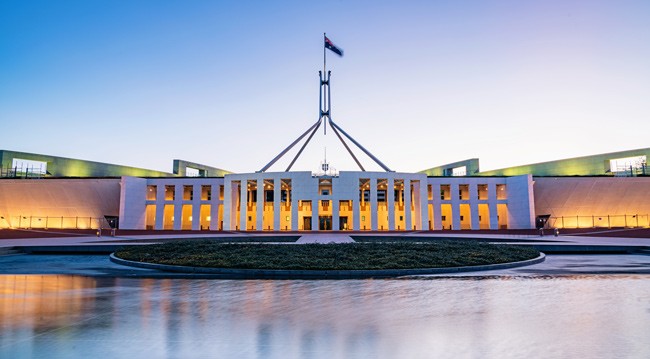
Government prioritises environmental law reform in final sitting weeks
There is broad agreement across Parliament, business and the community that Australia’s 25-year-old national environmental laws need updating. However, there is not agreement on the fix. The Government renewed its push for reform on 30 October, introducing the Environment Protection Reform Bill 2025, which passed the House of Representatives in early November. Key elements include:
- Establishing a national Environmental Protection Agency
- New ‘unacceptable impact’ provisions
- A framework for National Environmental Standards
- Updated offsets and ‘restoration contributions’
- Emissions estimates for project proponents
Twenty-six peak bodies, including the AICD, signed a joint letter to Environment Minister Murray Watt and Shadow Minister Angie Bell calling for passage of the laws, with key amendments. The Senate has referred the Bill and six related Bills to committee, with submissions open until 5 December 2025 and a report due March 2026. This notwithstanding, the Government is still seeking to pass the Bill in the final sitting weeks of this year.
ASIC removes greenwashing as enforcement priority
ASIC has confirmed that greenwashing will not be a formal enforcement priority in 2026, marking a shift after several years of explicit focus. Deputy Chair Sarah Court said the regulator had secured ‘a number of impactful decisions' and 'sent a clear message' that investor promises must be honoured.
The enforcement adjustment coincides with the commencement of mandatory climate-related reporting. However, the regulator stressed it will remain alert to serious misleading or deceptive conduct, citing recent actions, including new proceedings against Fiducian Investment Management Services and significant penalties against Active Super ($10.5m, October 2025). This follows earlier penalties against Vanguard ($12.9m, September 2024) and Mercer ($11.3m, August 2024).
Market developments update
Reporting and standards
- New Zealand will dramatically lift the mandatory climate reporting threshold (from a market cap of $60m to $1b), removing reporting obligations for more than half of currently covered organisations. Directors will no longer have personal liability for breaches of climate reporting rules, though they will remain liable for misleading or deceptive conduct and false or misleading statements.
- This month, the European Parliament cast two significant votes to scale back corporate sustainability rules – an omnibus vote reducing climate-transition plan and due-diligence obligations, and a separate vote narrowing sustainability reporting and due-diligence requirements to apply only to the largest companies.
- The Net-Zero Banking Alliance, a major global coalition of banks committed to net zero emissions, has formally disbanded, reflecting political pressures and challenges for voluntary climate commitments.
- US state-level greenhouse gas reporting is expanding to the east coast, with New York proposing mandatory reporting similar to California’s system.
- ISO 17298, the first global biodiversity standard, was released to help organisations integrate nature into governance, strategy and operations – responding to growing expectations around nature-related reporting.
- BloombergNEF notes a widening gap between financial institutions with detailed transition plans and those without.
- The OECD’s 2025 sustainability report highlights uneven reporting quality across countries, showing gaps in comparable global data.
- The IEA projects global renewable energy capacity will almost double by 2030, with solar and wind now the world’s largest electricity source.
Australian regulation and policy
- The Australian Government released draft National Climate Scenario Guidance, providing a common set of climate scenarios, concepts and decision frameworks to support risk assessments, disclosures and long-lived infrastructure planning. The guidance is designed to help organisations apply consistent and credible scenario analysis ahead of mandatory climate reporting. Consultation is open until 19 December 2025.
- The AASB has released an Exposure Draft of the proposed Australian Standard on Sustainability Assurance (ASSA 2025-11), with comments due by 2 December 2025.
- Australia launched a Nationally Determined Contribution (NDC) Investment Blueprint which outlines investment opportunities aligned with Paris-aligned emissions targets. It highlights priority sectors – including renewable energy, clean manufacturing, critical minerals, green hydrogen, nature repair and climate adaptation – to guide global investors seeking to support the country's transition.
- The federal government will require retailers in NSW, South Australia and south-east Queensland to offer households three hours of free electricity each day from midday, leveraging surplus solar generation and aiming to cut costs and ease grid pressure.
Data and insights
Australia remains among the highest for per capita extreme weather insurance losses, reflecting its exposure to natural hazards and the rising cost of climate-related disasters.
New Bureau of Meteorology coastal datasets show that sea-level rise will make infrequent coastal flooding increasingly common, providing updated evidence for governments and communities preparing for climate impacts.
Version 2.0 of the Australian Actuaries Climate Index (AACI) has been released, providing a sharper picture of how extreme weather and sea levels are changing across the country.
Ocean acidification has crossed critical thresholds for marine ecosystems, with seven of nine planetary boundaries now exceeded.
For the calendar
AI and sustainability: Key considerations for the board (AICD webinar – 4 Dec, 12–1pm) This session will help directors understand the environmental impacts of AI, assess the materiality of AI-related emissions and work with management on mitigation.
Climate Governance for Australian Directors (Online Short Course, next available March 2026): An interactive four week course designed to build director capability on climate governance, climate reporting and board oversight of transition planning.
Introduction to Climate Governance (Online Module): Available anytime, free for members. A self-paced module providing an overview of directors’ duties, climate risks and opportunities.

Already a member?
Login to view this content