

 This product has already been purchased.


Your next material risk may be closer to home. When health alarms sounded, these leaders re-evaluated their perfectionism, asked for help and re‑engineered how they work and lead.
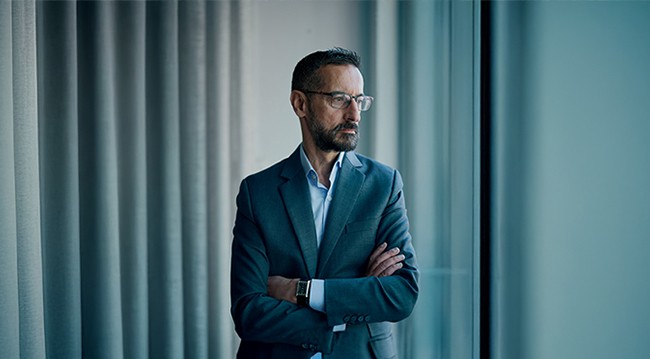
David Elia GAICD, CEO of Hostplus & Non-executive director of ACSI and SMC Australia (pictured above)
I was always active in looking after my general health and got regular blood tests. In December 2010, my doctor told me I had an elevated PSA. Most men die with prostate cancer, not from it. However, the number of Australian men now dying because of the cancer is increasing, primarily because they are living longer.
By May 2011, I’d had my prostate removed. Because I was so young — 41 — it had to come out. It’s rare you’re presented with an option with such complete certainty. Removal of the prostate would make me cancer-free. Pretty good odds.
My diagnosis was a stark reminder that risk exists in our lives and quietly compounds if we ignore it. We spend our professional lives managing risk, but many of us don’t apply that same discipline to our health. I was confronted with the reality that the most important assets we hold are things we take for granted — health, relationships, families and time. When it became personal for me, it drove home that the biggest risks in life aren’t always financial.
I took three months and got back to complete good health. By investing in myself, I was also investing in my organisation and my people. I was completely transparent about my diagnosis and surgery with my board and executive team, who were unbelievably supportive.
Men should think differently about health. We’d never ignore warning signs in our investment portfolio, but we tend to ignore them when they relate to ourselves. Get checked and act early. It is not a weakness; it is absolutely a strength.

Edwina Bartholomew, TV journalist Seven Network & National ambassador of Leukaemia Foundation
I have been so fortunate in many aspects of my blood cancer. It was easy to diagnose once I had the blood test, and I was able to get a biopsy quickly, confirming I had chronic myeloid leukaemia (CML). That meant I could start on targeted therapy medication straight away — no chemotherapy, no radiation. I’ve been extremely lucky and don’t want to waste that luck.
I was so thankful I caught it in time. That’s not the guarantee for everyone with CML. I’ve been in touch with people who haven’t been so fortunate, which is one of the reasons I signed up as a Leukaemia Foundation national ambassador.
The diagnosis has changed my perspective — I value life more. It brings into sharp focus the things that are important — spending time with your family and the beautiful friends who support you. I’ve been given a second chance at life and I’m now focused on what’s really important to me and my family, putting that first in my life. Did I before? Probably not.
Protecting the asset
I don’t sweat the small stuff anymore. My husband is a big part of this. He’s a really positive person and believes things will turn out in the end. I’ve started to trust the universe more. There’s definitely a focus on squeezing more juice out of life without squeezing the juice out of yourself. I’ve learned to be unapologetic about what matters to me. You realise the non-negotiables in life.
I recently read a book called Essentialism [by Greg McKeown] about focusing on the things that matter and “protecting the asset”. That means you have to be a little selfish about protecting your time and taking care of yourself.
If I hadn’t made that decision to say, “I’ve just turned 40, I’m going to take myself to the doctor and get an overall check-up,” then I’d have blood cancer now and not even know it.
Now I’m really aware of changes in my body, conscious when I’m exhausted and where I should focus my time and energy.
It gives you this strange kind of confidence. It’s a “might as well give it a shot” or a “hell, yes” approach to anything we do. [Bartholomew and her husband are restoring an historic pub in the central-west NSW town of Carcoar.]
It gives me a real appreciation of time being finite and I treat more moments as precious.
.jpg)
Jerry Pannu MAICD, Finance manager Australasia of World Challenge & Non-executive director of Arc XX Pty Ltd
My heart attack came completely out of the blue at 4am in April 2021. I was having trouble breathing and my wife immediately called the paramedics. The admitting cardiac surgeon looked me in the eye, saying, “You’ve got to sign this waiver… there’s a risk of mortality.” I’ll never forget those words.
They inserted a couple of stents and fixed what they call a “widow-maker heart attack” — these particular arteries are most commonly blocked in men. A few days later, they found more arteries that were 90–95 per cent blocked. I ended up with six stents and a nice upgrade to the old ticker.
I was reasonably active, played veterans hockey and soccer, and never smoked. It came down to two things — a family history of high cholesterol and a lot of stress. My job as a finance manager comes with high stress levels — the expectation of accuracy led to perfectionism. Before the heart attack, stress was woven into the fabric of my life and my physical and mental health suffered. Stress is a silent killer that men my age [59] don’t talk about. It’s a ridiculous taboo.
The changes I’ve made are simple. I’m more careful about my diet and while I no longer play team sports, I enjoy cycling and running. I’m not working until all hours and I enjoy time away with my family. Whether it’s a long weekend away with my wife or a summer evening walk, it’s about doing it now because tomorrow may never come. I’ve found it easier to open up about my mental health to people. Recently, my dad passed away and I started raising money for Beyond Blue.
I have a different perspective and am definitely more relaxed. I’m professional, but I won’t let it kill me. I hope I’m a different kind of leader now and that people around me realise it’s time to make a change themselves if they’re having similar problems. My key takeaway is to recognise stress early. Stop and take stock. Worry about yourself and the people around you. In my case, my wife and my two sons. I’ve got a second chance, and I won’t stuff it up.
This article first appeared as 'Health Scare tactics' in the February/March 2026 Issue of Company Director Magazine.
Latest news
Already a member?
Login to view this content