

 This product has already been purchased.

Daniel Westerman CEO of the Australian Energy Market Operator (AEMO) provides an update for directors on how the transition is unfolding, and what current planning signals suggest for the decades ahead.
Australia’s energy transition is transforming the way we produce, store, deliver and use energy.
Ten coal fired power stations have closed since 2012 in the east coast’s National Electricity Market (NEM). Four million Australian homes and businesses have rooftop solar, and power from that rooftop solar supplies over half of all demand in the NEM for periods of time.
Renewable energy, large and small, now supplies over 40% of demand throughout the year in the NEM – roughly double the contribution made just five years ago – and recent months have seen times when renewable energy supplied nearly 80% of demand in the NEM and over 90% in Western Australia.
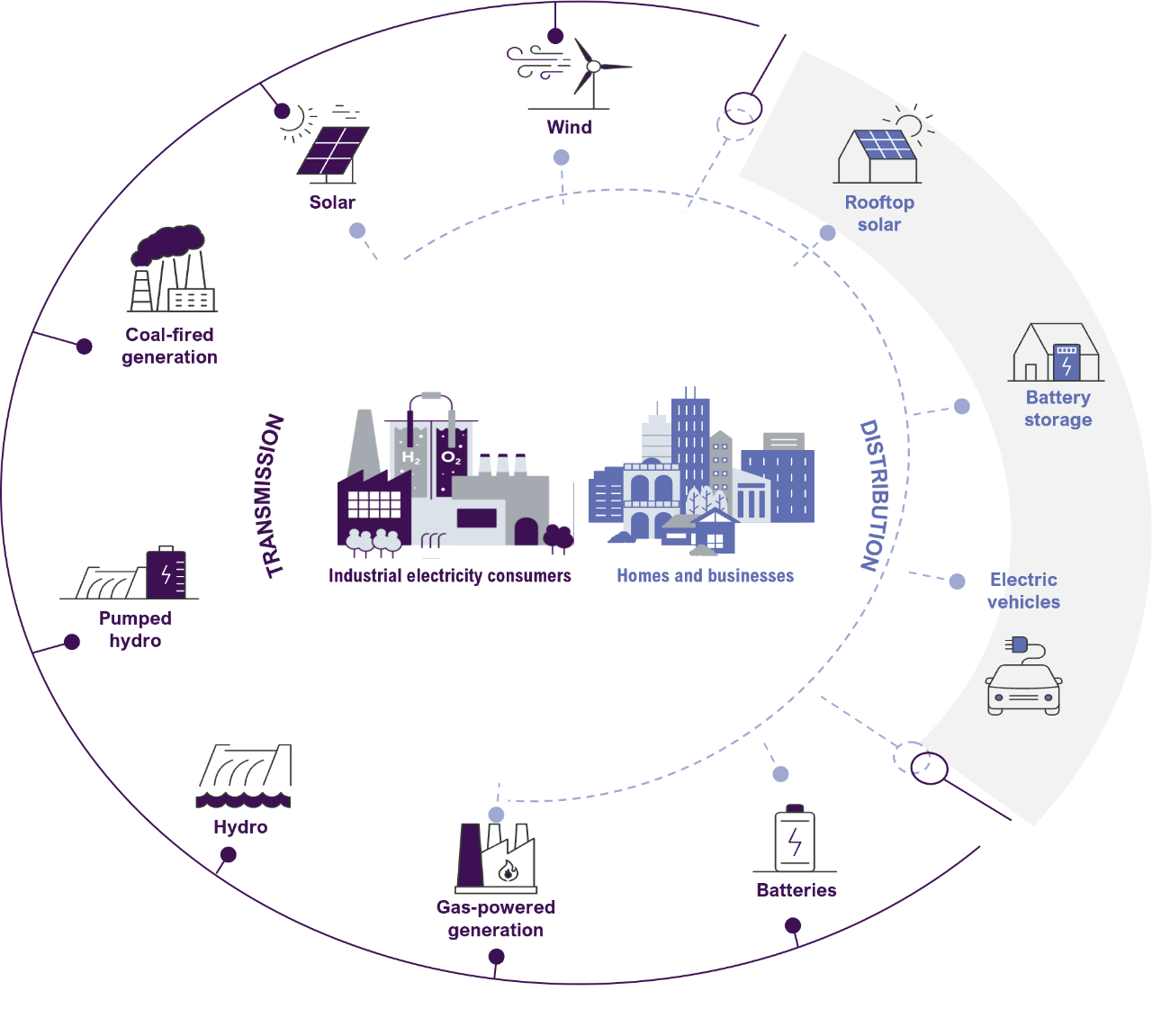
As Australia’s independent, not-for-profit operator of the nation’s main energy systems and markets, AEMO sits at the heart of this transition. We operate energy markets and systems in real time, and we serve as the national system planner for the NEM, identifying the lowest-cost mix of generation, storage and network investments needed to meet both consumer needs and government energy and emissions policies through our Integrated System Plan (ISP). Late last year, we released the Draft ISP in December for consultation, following 18 months of stakeholder collaboration, input and analysis.
At the core of the ISP is the optimal development path (ODP), identified by modelling around 2,000 combinations to set out the least-cost mix of grid-scale generation, storage and transmission to replace retiring coal plants, meet a near doubling of electricity use by 2050, and deliver emissions and energy targets.
Developed with industry, governments and consumers, the ISP is a roadmap to ensure that the energy system will meet the steep rise in electricity demand as households, businesses, and transport switch to electricity and data centres continue to grow. Consistent with previous ISPs, the Draft 2026 ISP reaffirms that renewable energy, connected by transmission and distribution, firmed with storage and backed up by gas, is the least-cost way forward for Australia.
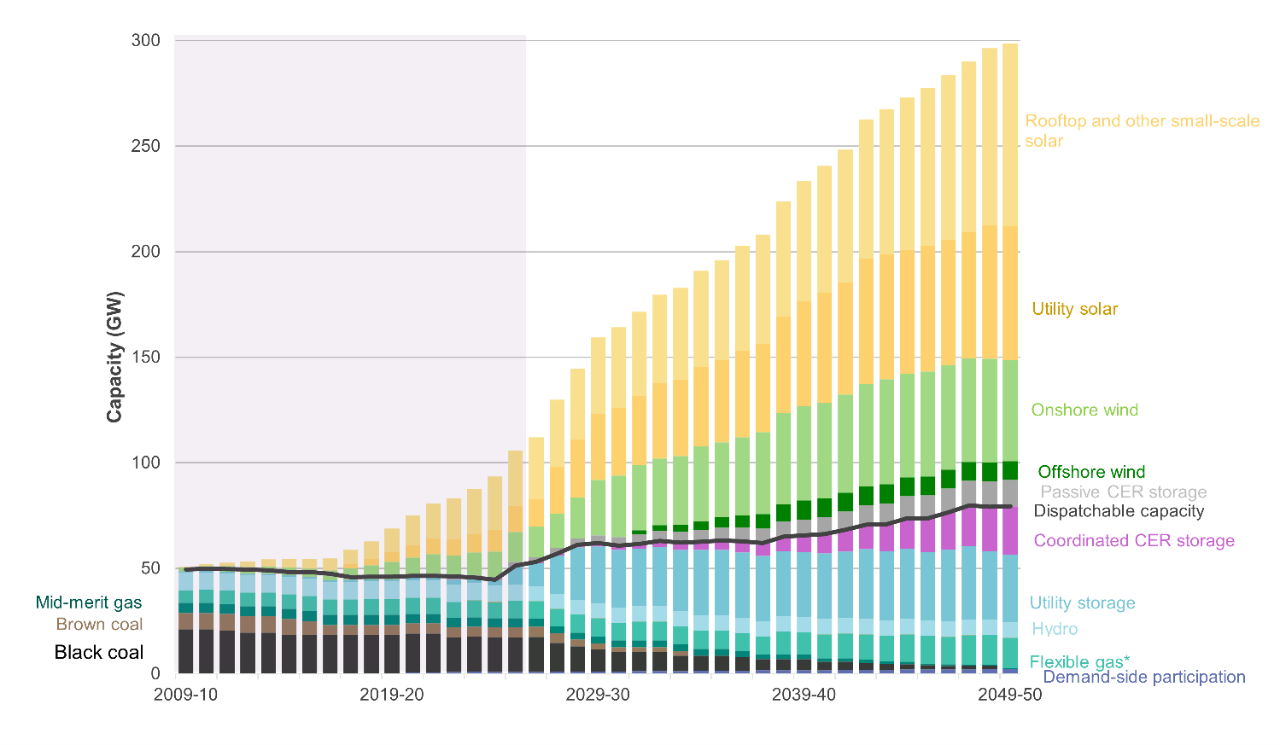
By 2050, the proposed ODP would see the NEM with a total of 120 gigawatts (GW) of grid-scale wind and solar, 40 GW of grid-scale storage and hydro, 14 GW of flexible gas-powered generation and an additional 6,000 km of transmission. Two-thirds of the remaining coal fleet is expected to close by 2035 to meet government targets, with the remaining Queensland coal plants to retire by 2049, based on the state’s energy policy.
The annualised total capital cost of grid-scale generation, storage, transmission and distribution in the ODP would be $128 billion in today’s dollars. Transmission investments alone (actionable and future projects), at around $9 billion, are expected to repay their costs, save consumers an additional $22 billion in avoided costs and deliver emissions reductions valued at $2 billion.
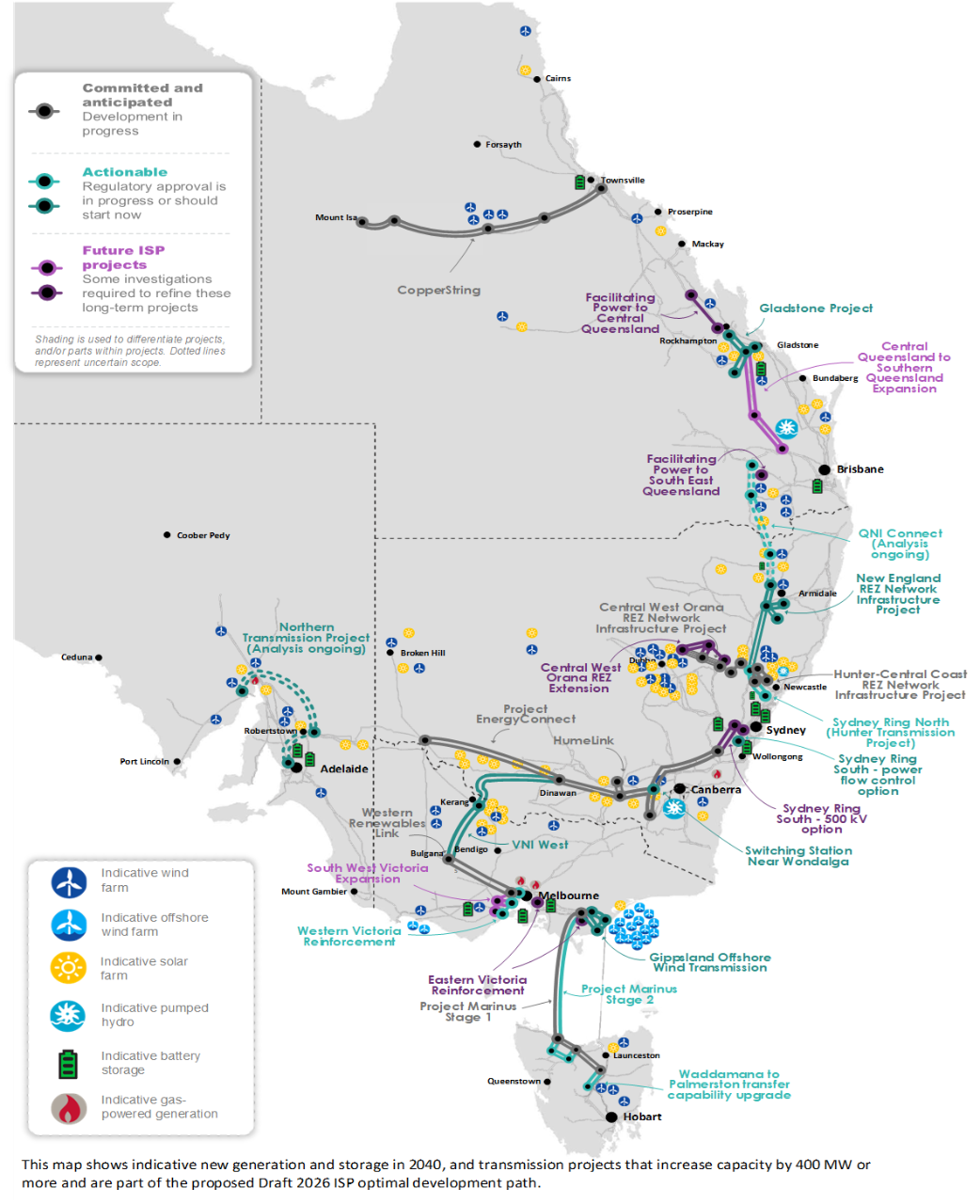
It is vitally important to deliver these investments on time. Delay would increase costs for consumers, while also delaying 2030 targets. AEMO’s analysis reinforces the need to progress the transmission projects in the ODP without delay. Aside from the consumer benefits, these transmission projects will help connect new generation, share energy from renewable energy zone to homes and businesses and improve grid resilience.
While the ISP is a plan for grid-scale infrastructure, it takes into account growing consumer participation in the Australian energy transition. Rooftop solar is a driving force of the transition – it is now collectively the largest generator in the country – and the recent surge in residential batteries and the uptake in electric vehicles will see consumers’ influence continue to grow. If these consumer devices can respond to market signals through their retailers, it will result in $7.2 billion in lower power system costs for everyone.
As the provider of an essential service, our industry works collaboratively through the challenges that frequent media headlines. From working to reduce impacts on local communities, striving to reduce costs wherever possible, securing the hardware Australia needs from constrained global supply chains, and ensuring new infrastructure is built before the old can retire.
Throughout this transition, AEMO’s control rooms manage Australia’s main power systems in real time. We work collaboratively and constructively with industry and governments in operational timeframes and throughout the planning horizons to 2050 and beyond. Our staff are experts in their fields, acting in the long-term interests of Australian energy consumers.
We regularly publish insights and analysis, including reports on Australia’s energy demand, supply, prices and other operational outcomes, that are particularly relevant for professionals working in the field of climate governance.
For instance, if you want to know the market share of renewables in the electricity consumed in on either the east or west coasts, or the emissions intensity of energy generation, that information is contained in our Quarterly Energy Dynamics reports. The Draft ISP itself provides AEMO’s forecasts out to 2050, including on the NEM’s emission’s trajectory.
Our free podcasts – AEMO On Air – also provide useful and accessible information on how Australia’s energy markets and systems operate, direct from our experts.
For more information on Australia’s energy systems and markets, to provide comment on the Draft ISP, or to learn more about how AEMO is working in the interests of Australian energy consumers, visit the website at www.aemo.com.au

Already a member?
Login to view this content