

 This product has already been purchased.


Brisbane played host to the AICDs’ Tech Governance Forum last week, where the message that cut through the noise was not about artificial intelligence itself, but about the people in the boardroom trying to govern it.
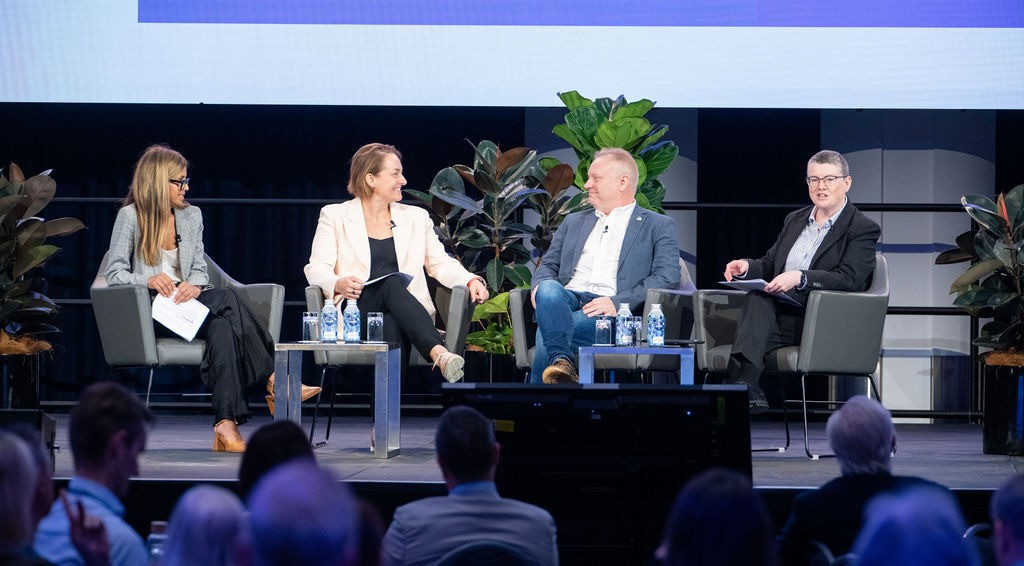
Across sessions featuring prominent chairs, executives and governance leaders including Pat O'Sullivan MAICD, Steve Vamos GAICD, Lee Hickin, Christine Holman GAICD and Sarah Carney, a consistent theme emerged: AI is exposing weaknesses in governance faster than boards can adapt to them.
While many Australian organisations remain focused on the technology itself, speakers argued the real challenge lies in determining whether existing leadership structures, board capabilities and operating models are equipped for a pace of change that is increasingly less tolerant of gradual adjustment.
Pat O’Sullivan: Reduce complexity, don’t add to it
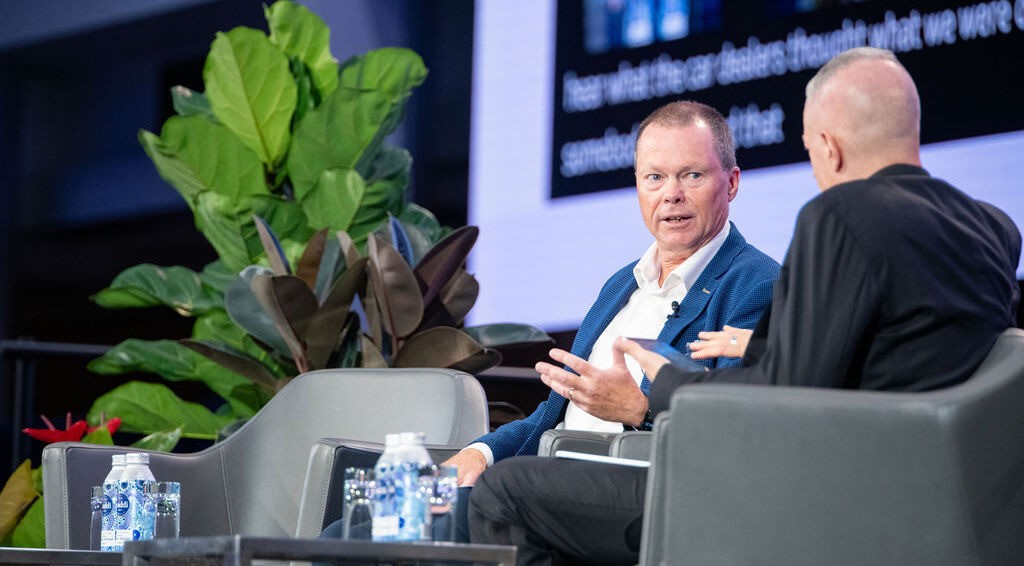
For O’Sullivan – Chair of CAR Group, SiteMinder and TechnologyOne – the AI moment is less a rupture than an acceleration of familiar patterns of change. But the speed, he warned, changes everything.
“The CEOs and executive teams are drinking out of fire hoses at the moment, because there’s so much information,” he said, describing boards as a potential source of either clarity or further overload.
His central argument was that directors risk doing harm not only through inaction, but by adding noise to already saturated executive teams.
“We, as directors, have to stand back and think about what we can contribute from those learned experiences from previous changes that can actually help the executive work through this period of time,” said O’Sullivan.
“We need to be in the boardroom and outside the boardroom with the executive, having conversations that are reasonably specific, rather than just us generally trying to educate ourselves through the use of the management teams.”
Instead of positioning AI as an unprecedented disruption, O’Sullivan framed it as part of a longer continuum of change he had lived through – from the collapse of print classifieds to the rise of digital platforms.
“We all need to be very alert to it. But I wouldn’t be panicking about it at this point in time,” he said, while also encouraging businesses to “place some educated bets” to avoid “AI paralysis”.
“There’s a risk that we wait thinking, I’m going to wait for the next best thing, and actually don’t make the investment today”.
He called on boards to tackle a more practical test, which includes engaging executives in specific, grounded use cases, not broad thematic discussions.
“Put it in a bucket rather than just a general ‘we’re talking about AI’,” he said. “Then come at the use case… something that is very practical.”
Increasingly, he said, directors should ask whether leadership teams are even using the tools they are expected to govern.
“If a CEO and their executive, and the next level down, are not actually using AI tools in their everyday life, both business and personal, there’s a question to be asked.”
But directors should also be embracing the trend, said O’Sullivan. This, he said, doesn’t need to involve anything elaborate – even using AI for simple, low-level tasks can help streamline everyday work.
Steve Vamos: Strategy is cheap, execution is hard

Speaking of embracing trends, Vamos, former CEO of Xero and author of Through Shifts and Shocks, told directors many organisations still overvalue planning and are underweight on delivery.
“When you develop a strategy, that is 20 per cent max of the work that is involved. 80 per cent is in making that strategy into action that is real,” he said.
That means turning ambition into coordinated, cross-functional work that is properly funded and clearly owned. Without that discipline, companies drift into what he called “a culture of best endeavours”.
“It’s really bad,” said Vamos. “You don’t want to operate a culture of best endeavours. It has to be a culture of commitment. The only way to do that is to have the conversation that says, ‘What can we do with the resources we have, and what should we do going forward that we might have to park?’”
He said many boards were not asking hard enough questions about whether management could actually execute what had been approved.
“I always thought we were too soft, in our inquiry and in our inspection,” said Vamos.
For directors searching for the real lever of influence, his answer was blunt. “The only thing a board does that really matters is hire the right CEO.”
And when companies complain of chronic misalignment between business units, technology teams or support functions, he said the accountability sat squarely at the top.
“IT not being aligned with business, HR not being aligned… the CEO is the problem, so get to know your CEO.”
Vamos also challenged the instinct to quarantine digital issues inside a specialist committee, noting, “I’d rather have a strategy execution detail committee than a technology committee.
“If you think about it, your strategic priorities will feed the technology agenda. Today, there may actually be one, which is all about AI experimentation, development and learning. That’s fine, but it all ends up in your strategy.”
The pace problem: Four years where it once took four decades
Hickin, who leads Australia’s National AI Centre, issued a broader warning – this change cycle is not just faster, it is categorically different.
“We first started to expose ourselves to this sort of large language model in 2022… and in four years, it’s a chasm of difference that would have taken us four decades in any other technology,” he said. “You have to recognise the pace is moving quickly.”
For Hickin, that compression of time destroys one of the traditional buffers boards rely on and that is gradual adaptation.
Contrary to O’Sullivan, he said, “If we look at it from the point of view of ‘time will tell us whether this is disruptive’, I’m afraid it’ll be too late when that time has told us. You’ll already be in a position where the change is happening and [has] happened to you.”
His sharper warning related to organisational structure itself. AI, he argued, does not simply slot into existing systems.
“It fundamentally changes the cognitive process of information,” he said. “It challenges many business norms.”
Christine Holman: The board renewal problem
Holman, a non-executive director of AGL Energy and Collins Foods, widened this lens to board composition itself.
“The board composition gap is a real one,” she said. “I would argue that the gap has compounded over the past three years.”
In her view, AI has made that divide impossible to ignore.
“It’s a real leadership issue,” she said, encouraging boards to look more keenly at their skills matrix.
“I’d be holding the mirror to myself [and asking] how my skill is relevant today, unless I have taken the appropriate steps to educate myself at absolute pace.”
Holman also questioned whether traditional governance structures are still fit for purpose.
“We’re still caught up in a cycle of nine-year terms on boards,” she said. “So the very body that’s responsible for leadership renewal to keep up with the pace of technology has a renewal problem itself.”
She was blunt in her conclusion, arguing that appointing a single director with technology experience does not solve the overarching problem.
“We need basic functional technology skills across all directors.”
Sarah Carney: AI for purpose, not performance theatre
Carney, National Technology Officer at Microsoft, said many organisations are trapped in performative AI adoption.
“Do we have enough AI? Have we got enough AI in here? What are we doing in AI?” That mindset, she said, ignored whether the technology solved a real business problem.
“Just because you have an AI hammer, not everything is an AI nail.”
She encouraged boards to “disconnect from the hype”. In other words, focus less on generic productivity promises and more on redesigning business processes with clear outcomes.
“You have to now shift into process, AI for purpose.”
The governance takeaway
Across the forum, the consensus was that while AI may be the catalyst, governance is the real story.
Attendees heard that technology more broadly, from AI to cybersecurity, must become embedded in the way businesses operate. It is no longer simply an enabler, it is now a core pillar of the business itself.
But the key question for boards, speakers argued, is how to govern accordingly; that is,how to ensure technology is properly embedded into strategy, supported by the right operating structures and backed by appropriate capital allocation.
Latest news
Already a member?
Login to view this content